Restaurants have their rules written down. Staff don't read them.
I saw it working behind a bar: training was a compliance module that ticked a box, and finding an answer meant flipping through spec sheets or asking a manager again.
What it does
A manager uploads the documents the restaurant already has.
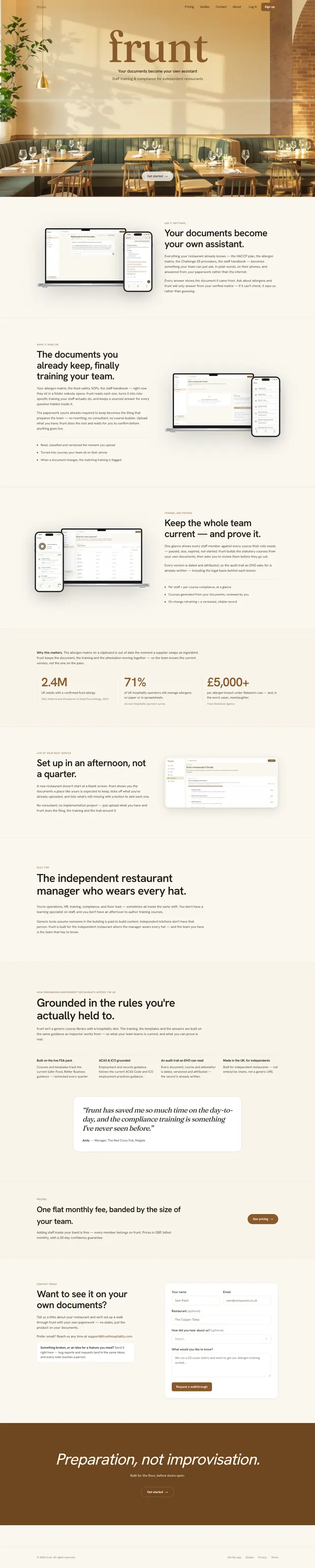
frunt turns them into short courses on staff phones.
Staff ask in plain words; every answer names the document it came from.
For independent restaurants · built and run solo · live since June 2026
Everything I've built, laid out the way I work on it.
Follow the tour with Next, or pick any frame to jump straight to it.
frunt: the problem
Restaurants have their rules written down. Staff don't read them.
frunt turns a restaurant's own documents into staff training and instant answers. A web app for managers; a phone app and WhatsApp for staff.
frunt: the manager app
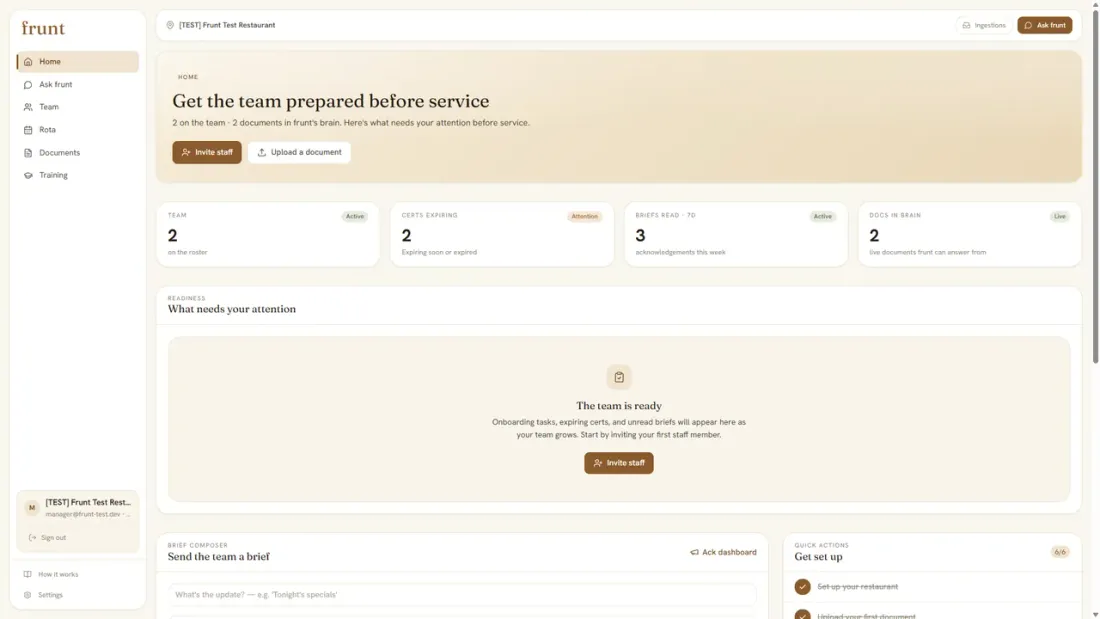
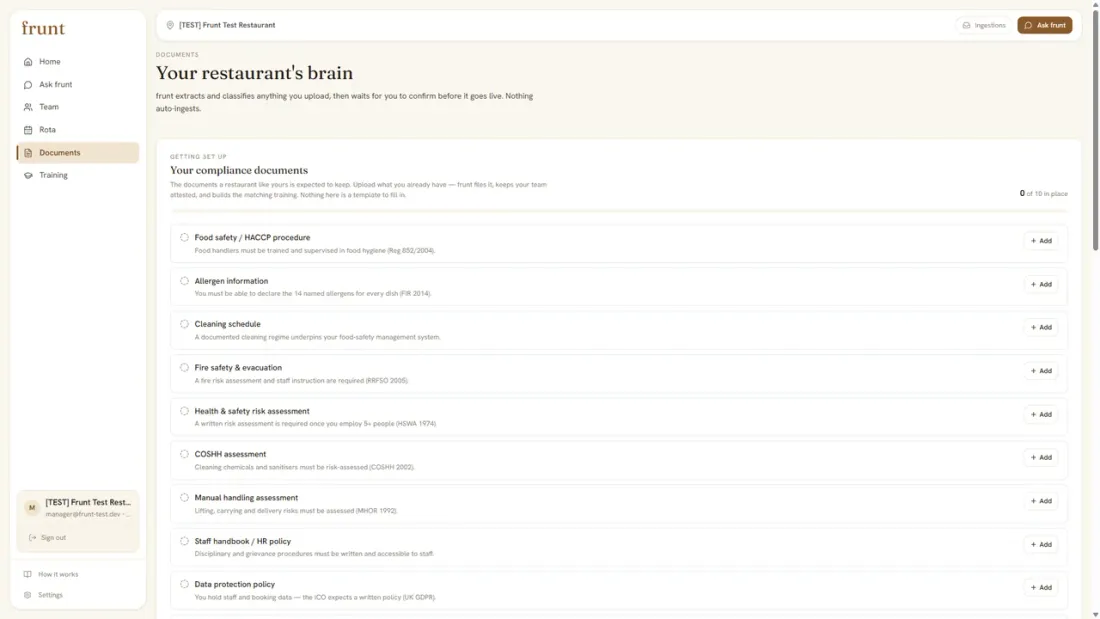
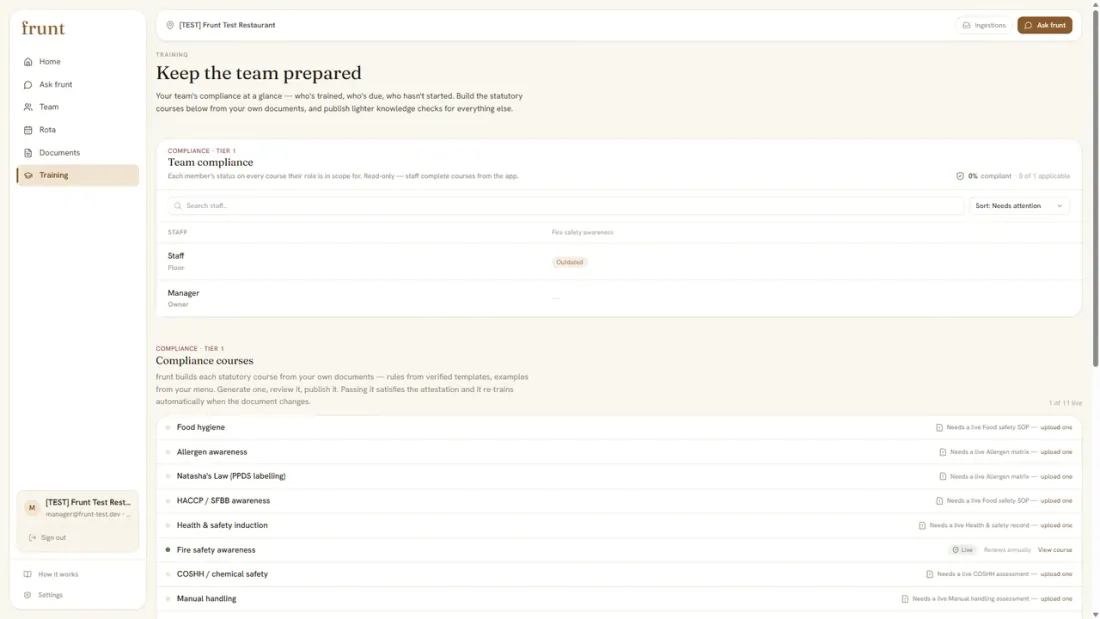
Managers bring the documents they already have.
frunt reads them, files them and turns them into courses, and a manager checks each one before staff see it. Use the tabs under the laptop to look through the screens.
frunt: sourced answers
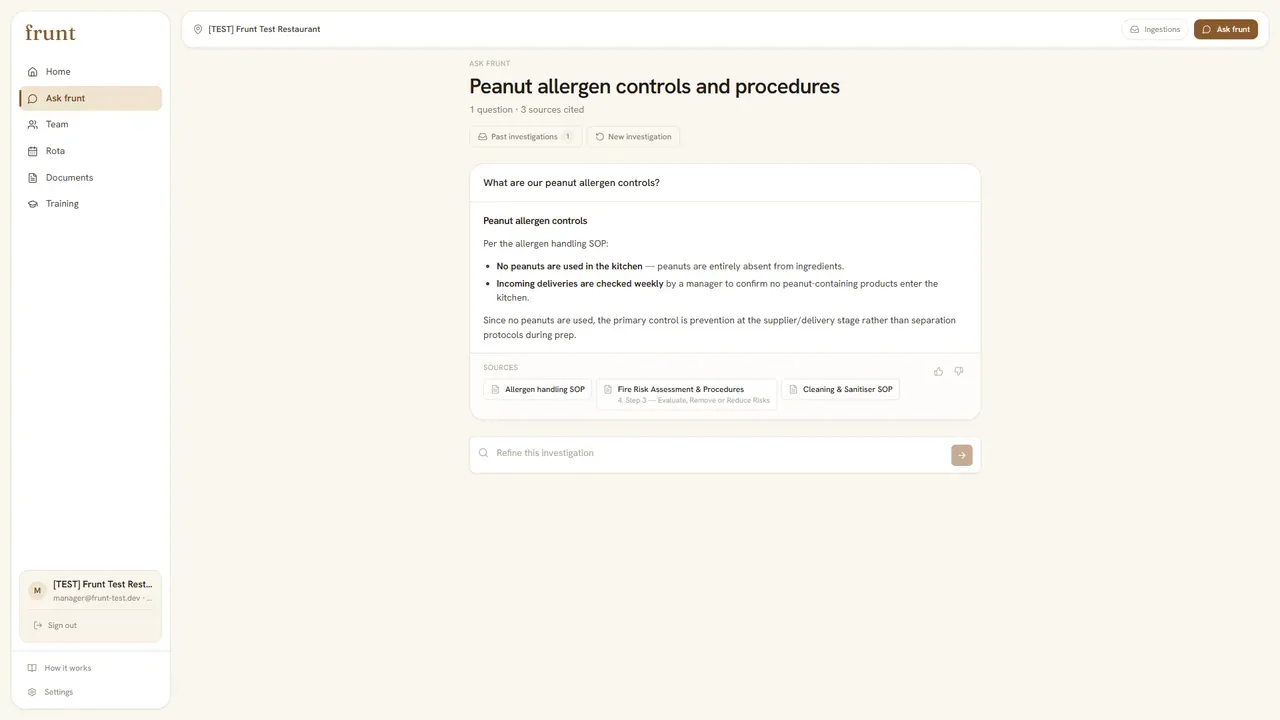
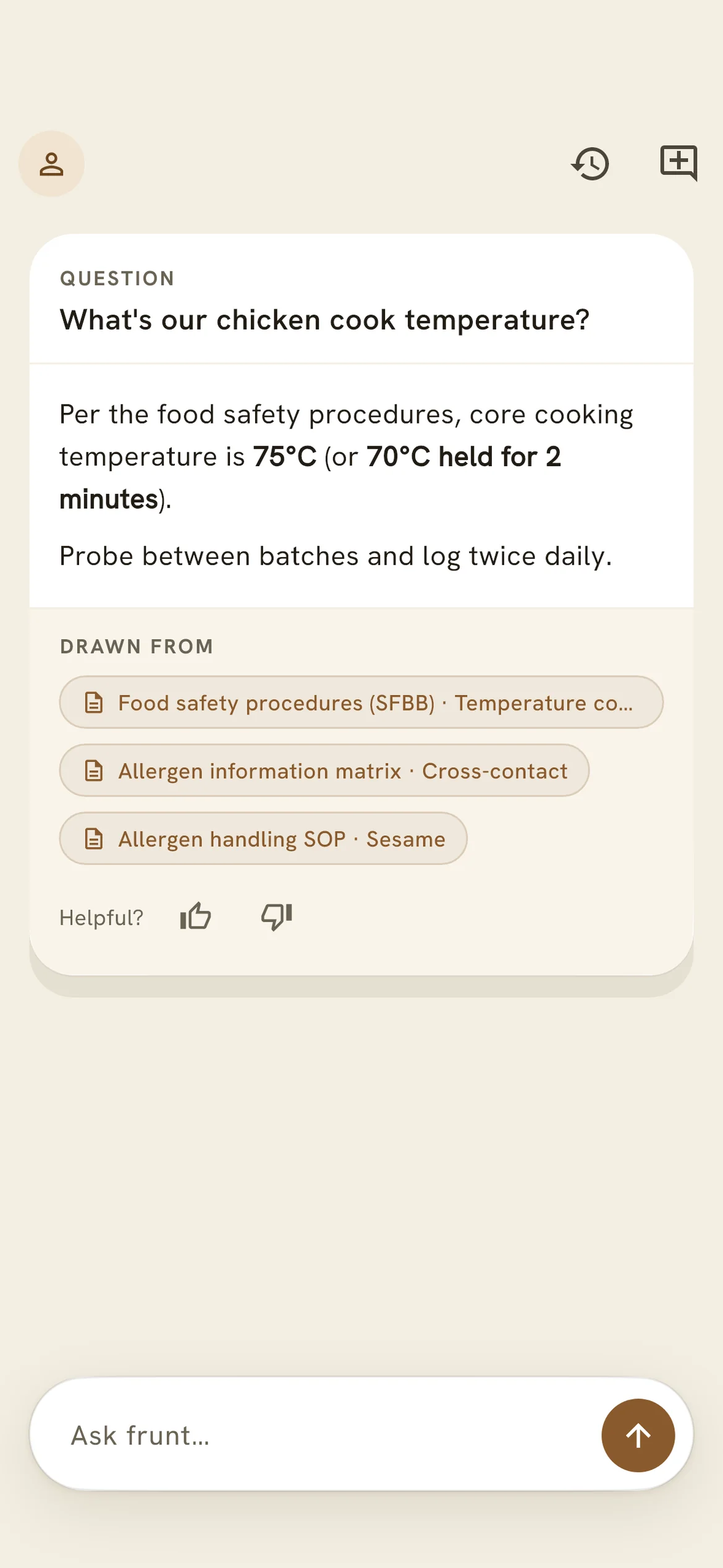
Every answer shows where it came from.
Staff ask in plain words. frunt answers only from that restaurant's documents and cites each source, so a manager can check it.
frunt: the staff app
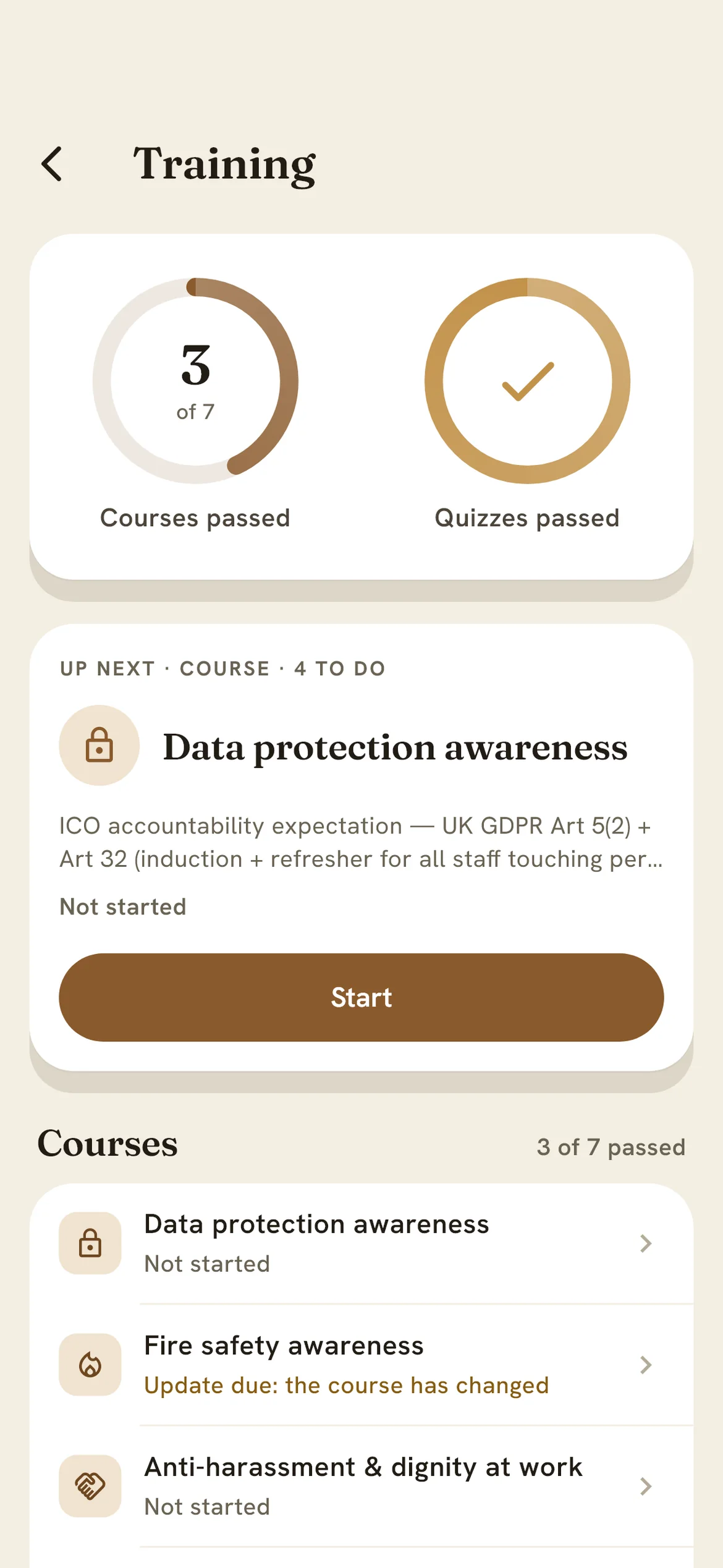
Staff get answers and training on their phone.
Two screens from the staff app, on the App Store and Google Play. Staff can also ask on WhatsApp, with no app to install.
frunt: the whole system
More than an app.
frunt is six parts I designed, built and run: two apps, a website, an admin console, an Instagram studio and an outreach engine.
Manager app (Live): Documents in; cited answers and training out.
Staff app (Live): Ask, read, sign off and train from a phone, or ask on WhatsApp. On the App Store and Google Play.
Website (Live): Marketing site, pricing and ten UK-law guides, built to be found.
Admin console (In use): How I run the business: customers, revenue, AI cost per feature, health checks.
Instagram studio (Live): Claude proposes posts and I approve them; they render, schedule, publish and report back.
Outreach + analytics (In use): Sourcing, email, calls and visits, with PostHog and Search Console showing what works.
frunt: how it was built
Every big call written down, with the date I made it.
From a demo on 1 May 2026 to both app stores by 13 June. Three of the calls that shaped it:
Allergen answers come from the database and a plain-code check, never from a second AI.
When jobs failed without a word, every job started reporting that it ran.
When features crowded out the answers, I froze them.
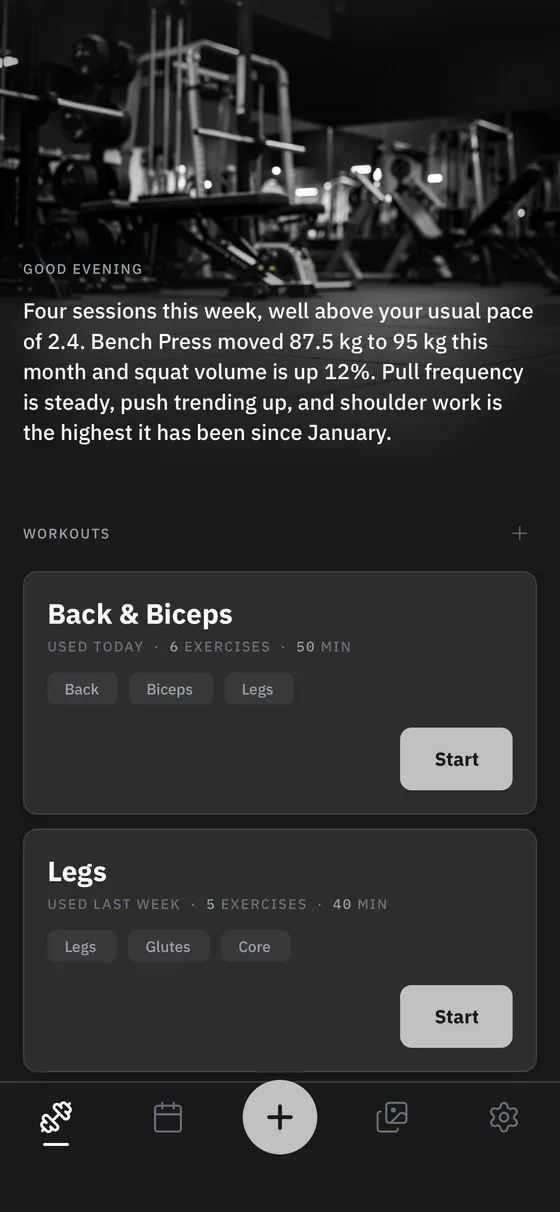
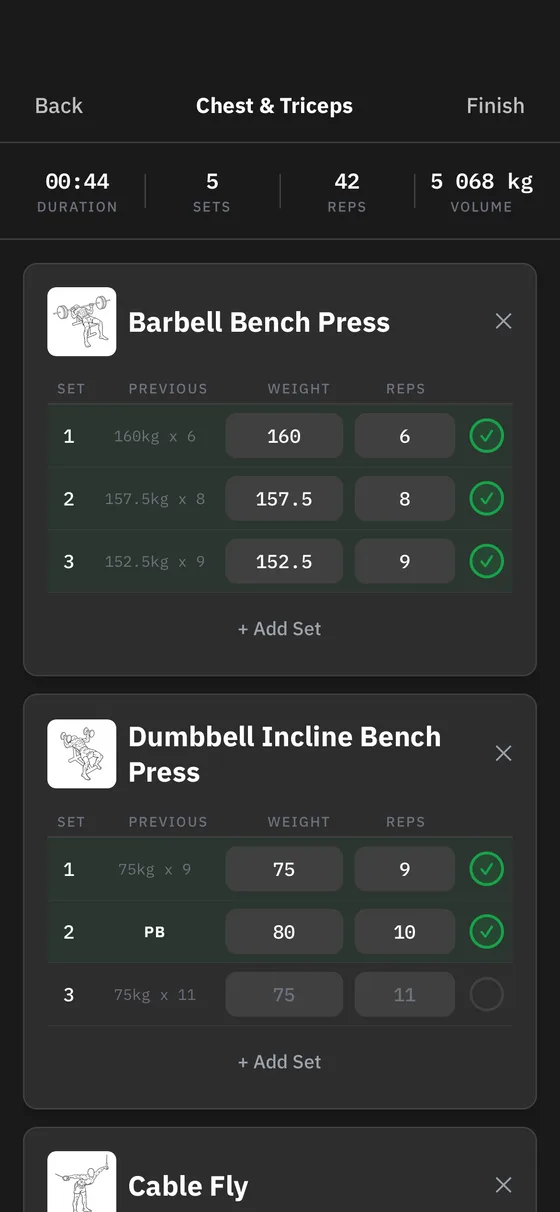
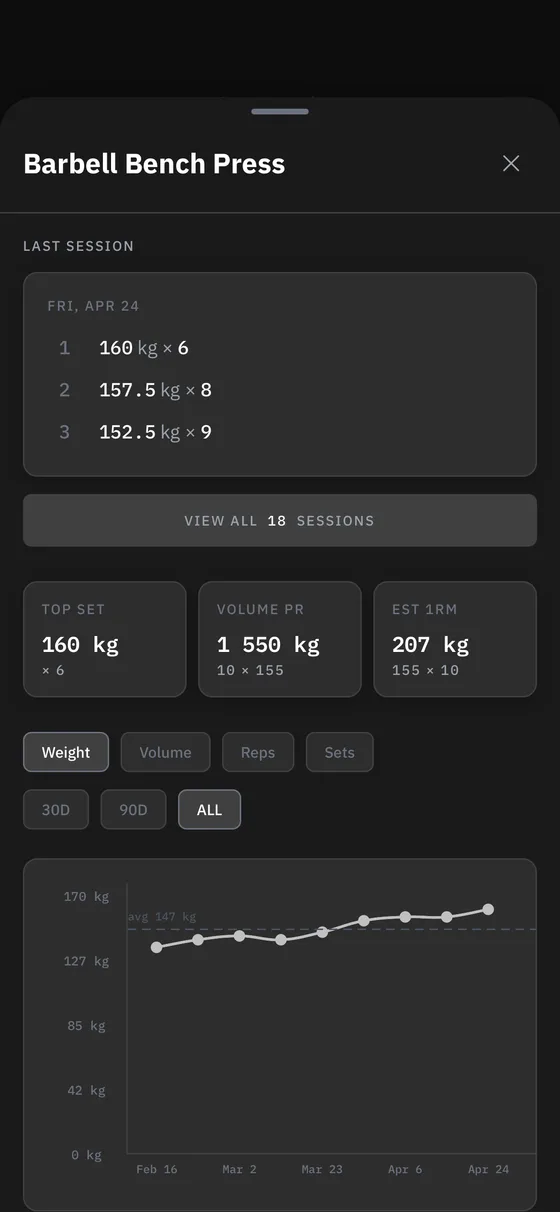
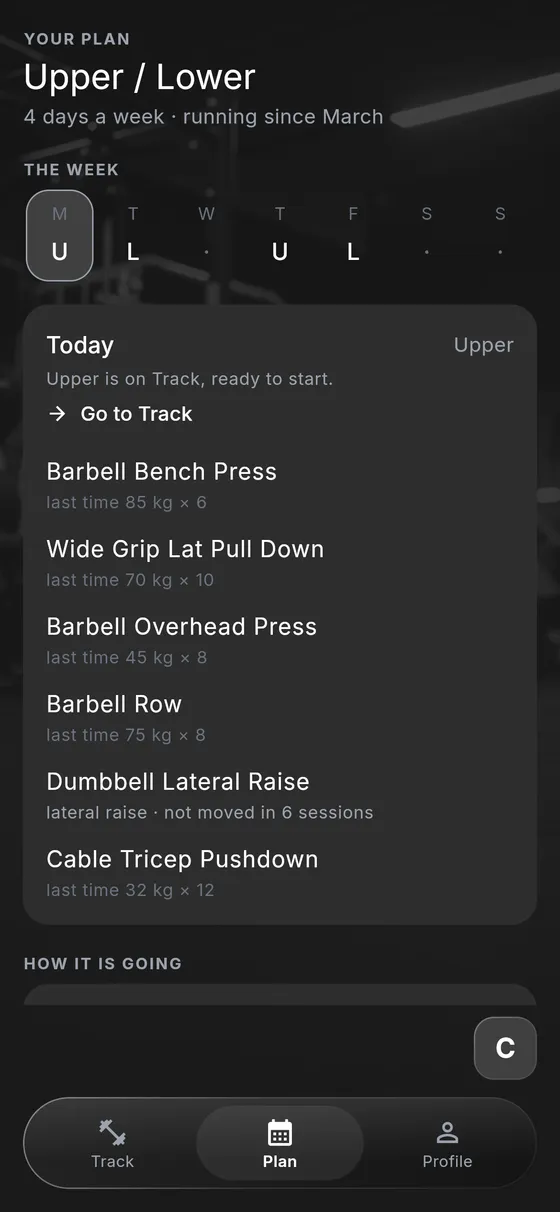
A gym tracker in React Native: 266 exercises, progress charts, personal bests and cloud backup.
MGKFitness: the rebuild
Then I rebuilt it as part of something bigger.
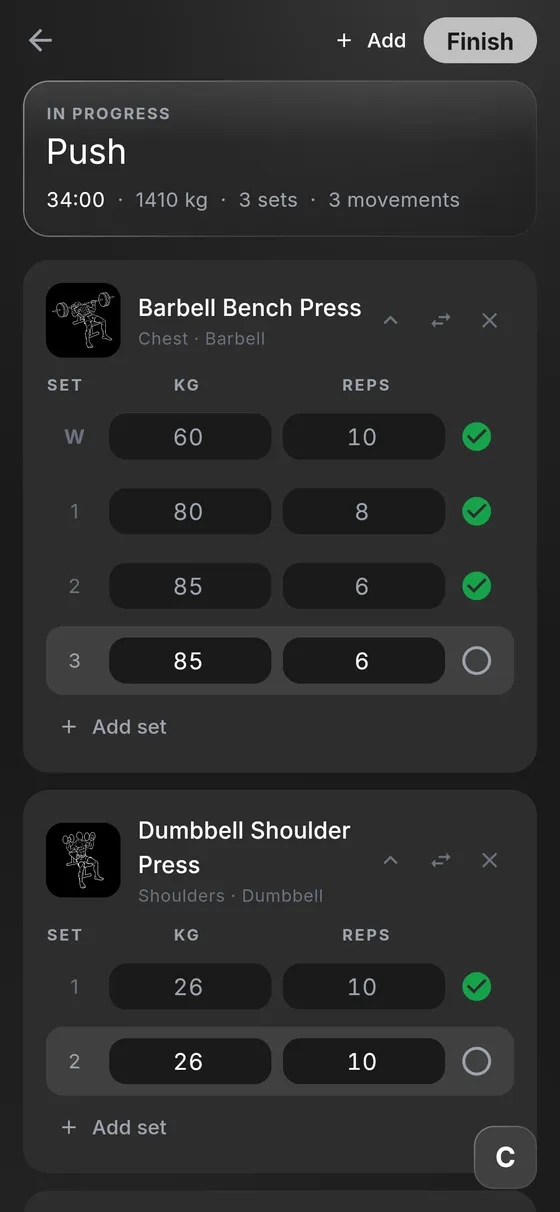
Lift is Liftio rewritten in Flutter, one app in a suite with Run. I kept Liftio's App Store listing instead of starting fresh, so anyone who had Liftio got Lift as an update.
MGKFitness: the suite
Two apps, one account.
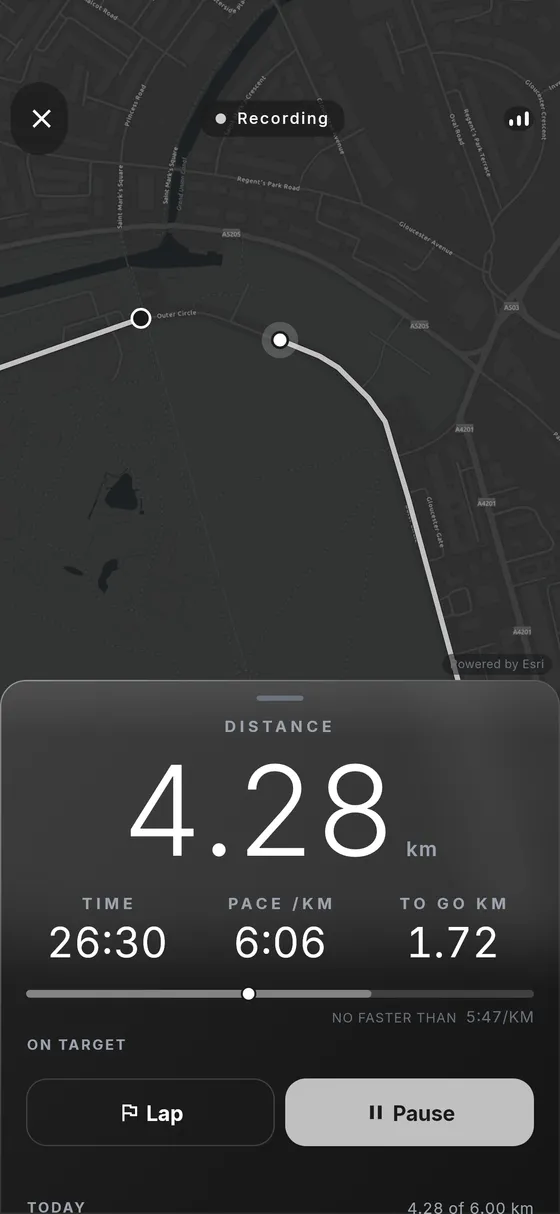
Sign in to Run and Lift with the same account. Each app works on its own, built on one design system and one backend.
MGKFitness: the whole system
A suite, not two apps.
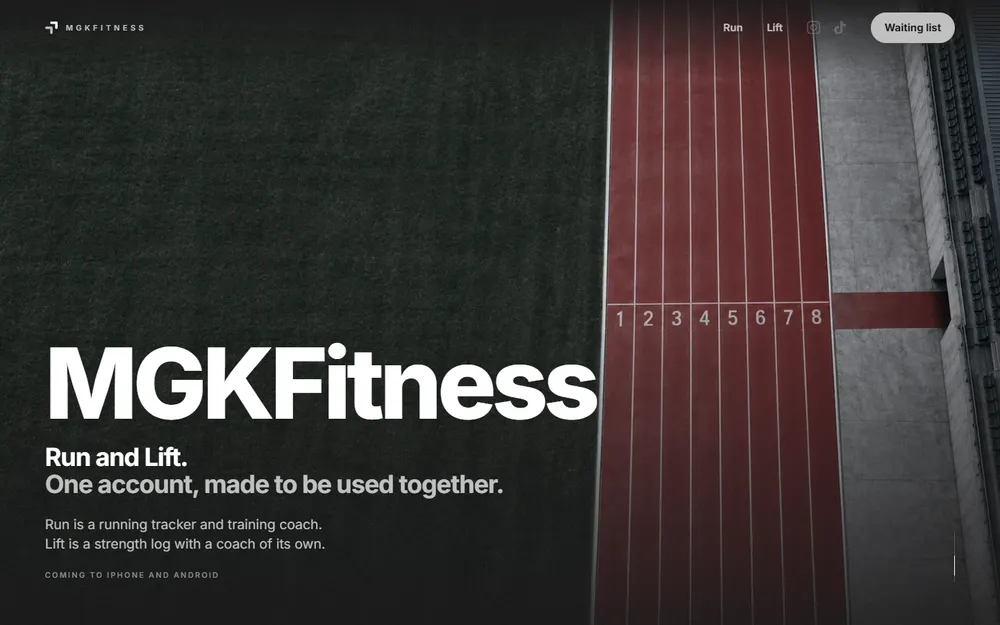
Two apps on one account and one backend, an AI coach, a website, a social pipeline and the release tooling around them.
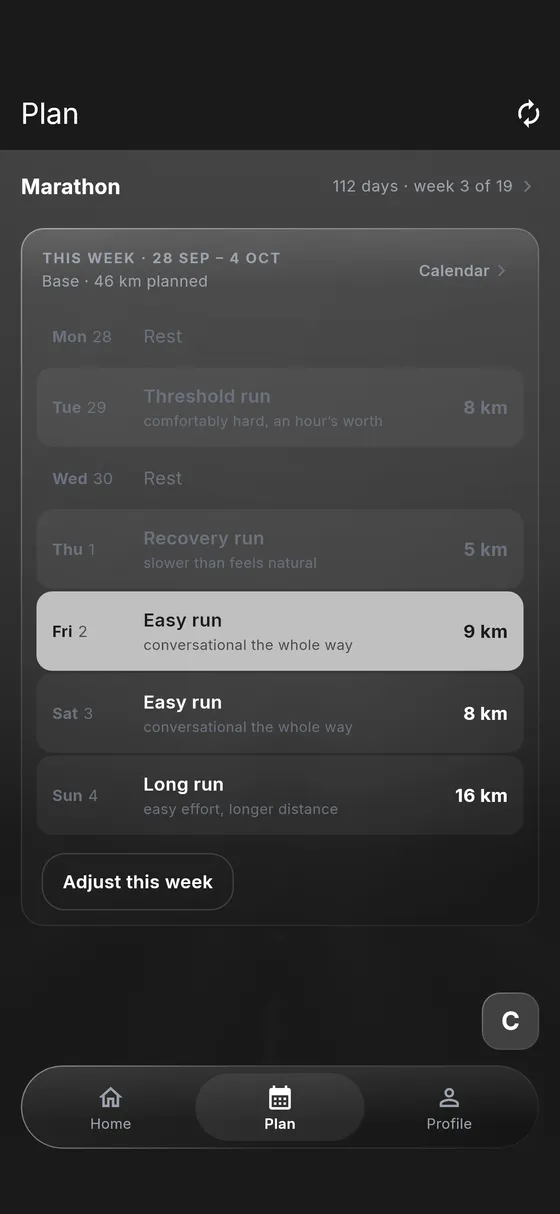
Run (Live): Running tracker with an AI training coach.
Lift (Live): Strength log with a coach of its own. The rebuild of Liftio.
Backend + AI coach (Live): One account across both apps. Plain code checks every plan the coach writes before you see it.
Website (Live): Scroll film, support and legal pages. No tracking, by design.
Social (In development): Posts drawn in Remotion from the site's own words, published through the Instagram API.
Release ops (In use): Store listings and submissions run from Claude Code; builds on Codemagic.
MGKFitness: how it was built
Two apps, from the first decision to both stores.
Run started on 25 July 2026. Both apps were on both stores by 19 October. Three of the calls that shaped it:
One backend for both apps, with every row locked to the person it belongs to.
The coach can't make up a weight: plain code checks every plan it writes.
Liftio rebuilt in Flutter, and shipped as an update to itself.
I use AI to move fast. These are the checks that keep it honest.
Plan, decide, build, check, ship. Each step leaves something behind that you can look at, and under each one are the skills I built for it, loaded live from GitHub.
Install my skills: npx skills add MattKay02/skills (MattKay02/skills)
codemagic-build (Ship): Starts a CI build from the terminal and reports back when it lands. Tested: loads when it's asked for and stays out otherwise in 2 of 2 cases.
ui-walk (Check): Screenshots every state of a feature, in order, ready to flip through. Tested: loads when it's asked for and stays out otherwise in 2 of 2 cases. Shown: A real walk of the frunt case study on matthewkay.dev, 29 Oct 2026: six numbered screenshots (the board stop that opens it, the study over the board, its decisions, dark theme, a phone following the /#frunt link, the standalone page) and the one finding: a quote that opens with a closing mark.
page-audit (Check): Reviews a page on seven axes and returns a ranked punch list. Tested: loads when it's asked for and stays out otherwise in 2 of 2 cases.
emulator-verify (Check): Checks a Flutter change on the Android emulator by reading the screen back. Tested: loads when it's asked for and stays out otherwise in 2 of 2 cases.
lighthouse-audit (Check): Measures a production build on mobile and says what to fix first. Tested: loads when it's asked for and stays out otherwise in 2 of 2 cases. Shown: Lighthouse on matthewkay.dev, mobile, median of three runs (77, 78, 80), 6 Oct 2026: Performance 78, Accessibility, Best practices and SEO 100. Fix first: LCP 5.1 s, mostly the hero name waiting on its fade-in; defer 21 offscreen images (about 528 KiB); preconnect to the live skills data (about 330 ms).
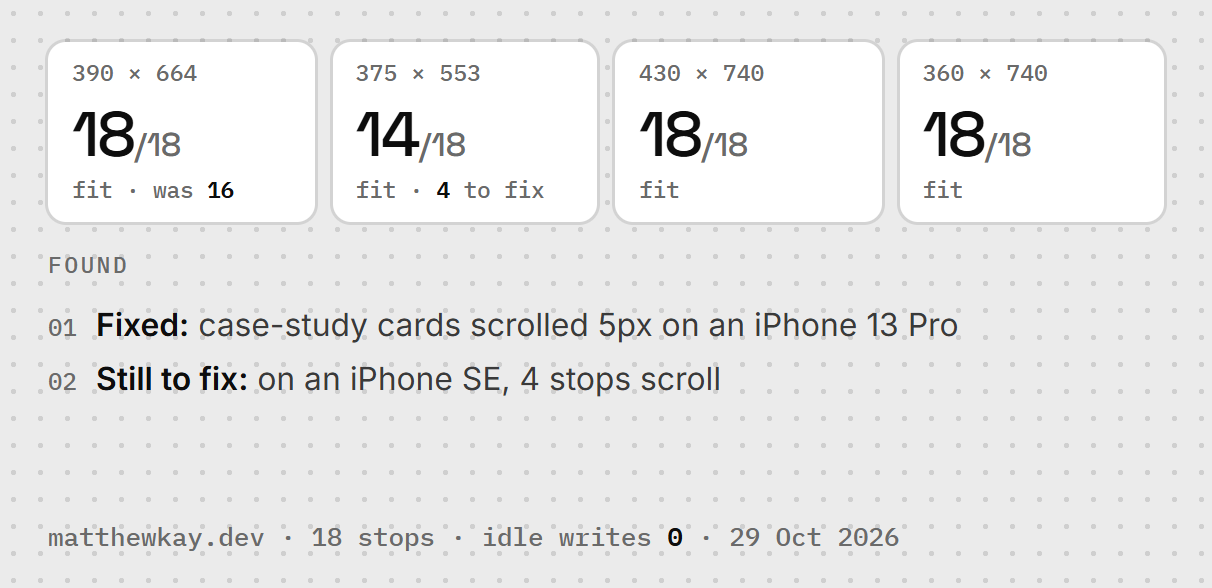
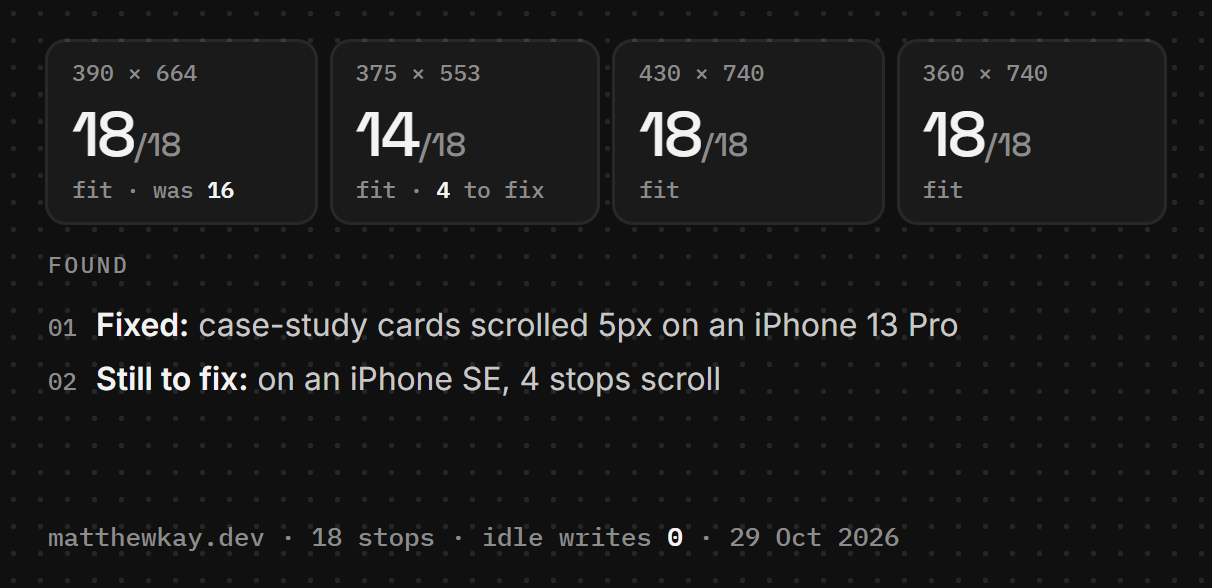
phone-fit (Check): Checks every step at real iPhone sizes: nothing scrolls, Next stays on screen, the page rests. Why I wrote it: My portfolio crashed on iPhones and hid its Next button, while every desktop check passed. Tested: loads when it's asked for and stays out otherwise in 2 of 2 cases. Shown: phone-fit on matthewkay.dev, 29 Oct 2026: its 18 tour stops at four phone sizes. At 390 x 664 (an iPhone 13 Pro with Safari's bar showing) 16 of 18 fit before the fix and all 18 after; the two case-study cards had to scroll 5px. At 375 x 553 (iPhone SE) 4 stops still scroll. At 430 x 740 and 360 x 740 all fit. The page makes no changes at rest.
screen-board (Plan): Every screen and state of an app on one page, each with what it's for. Tested: loads when it's asked for and stays out otherwise in 2 of 2 cases.
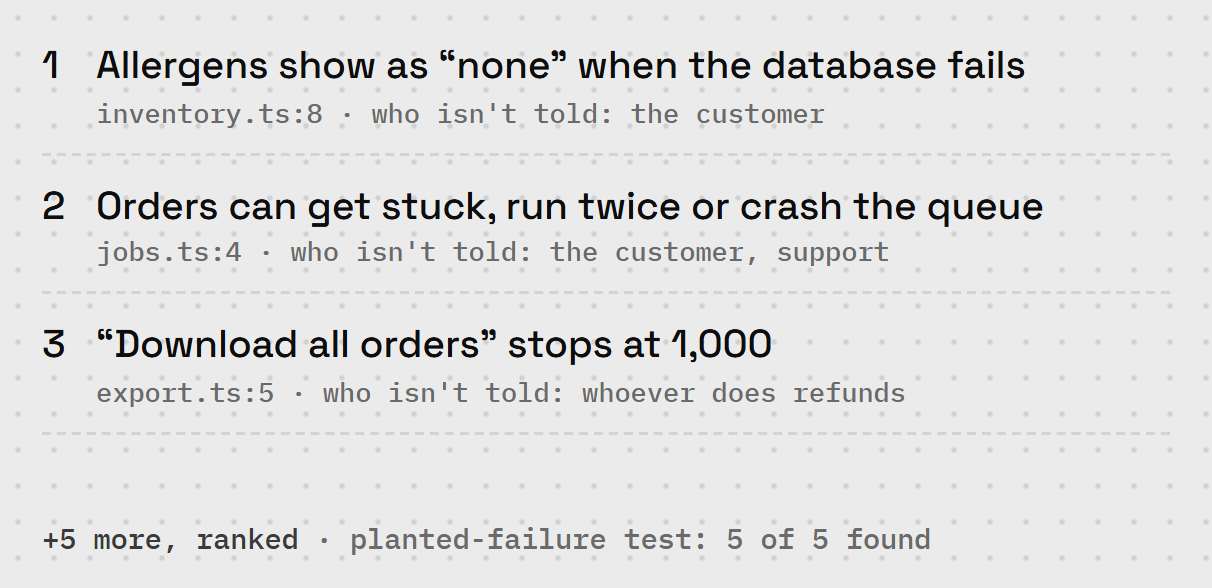
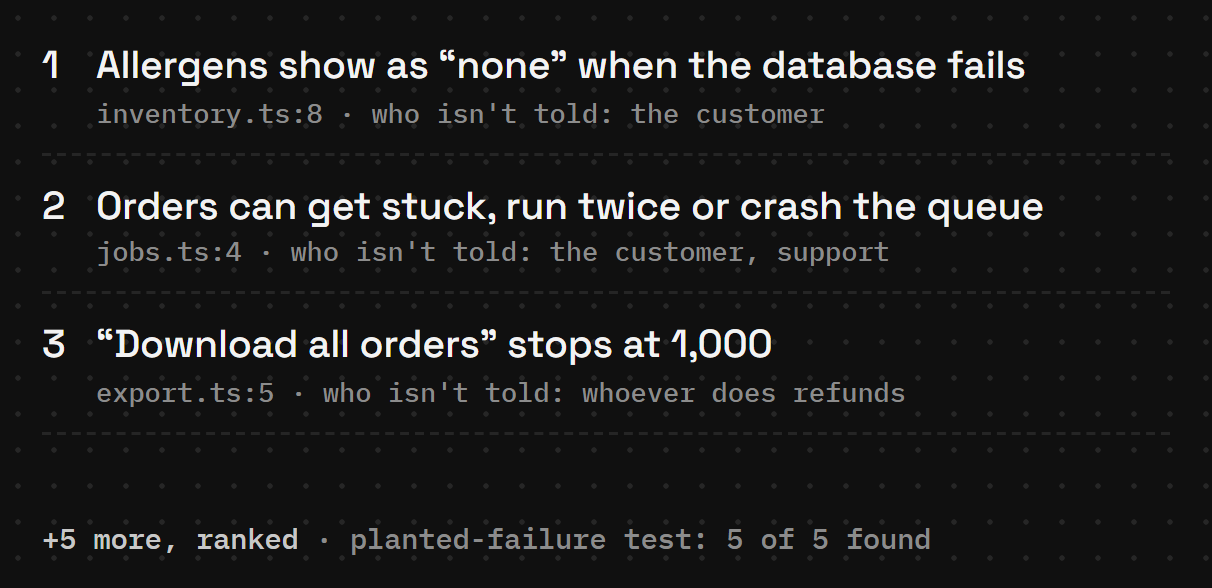
silent-failure-sweep (Check): Finds failures nobody is told about, ranked by who they hurt. Why I wrote it: A live app kept only the first 17 pages of a 40-page document, and nobody was told. Tested: loads when it's asked for and stays out otherwise in 2 of 2 cases; task score 0.92 with the skill, 0.88 without. Shown: The sweep on a test service with five planted silent failures, all five found. Top three of eight ranked findings: allergens show as none when the database fails; orders can get stuck, run twice or crash the queue; Download all orders stops at 1,000.
motion-sketchbook (Decide): Sketches design options as films and stills, so the choice is made by watching. Tested: loads when it's asked for and stays out otherwise in 2 of 2 cases.
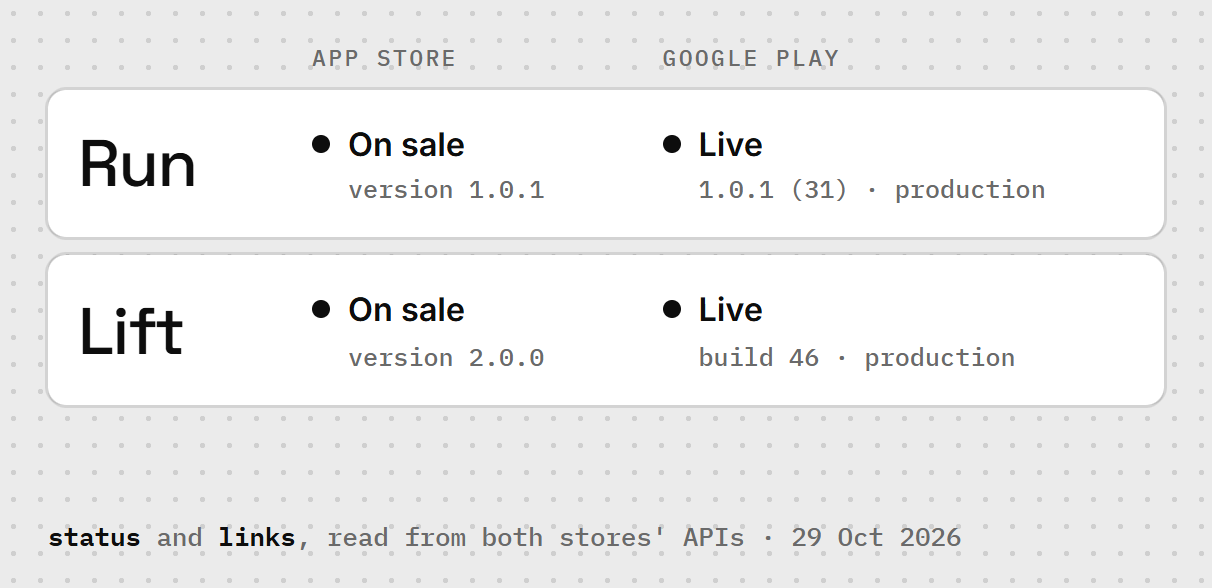
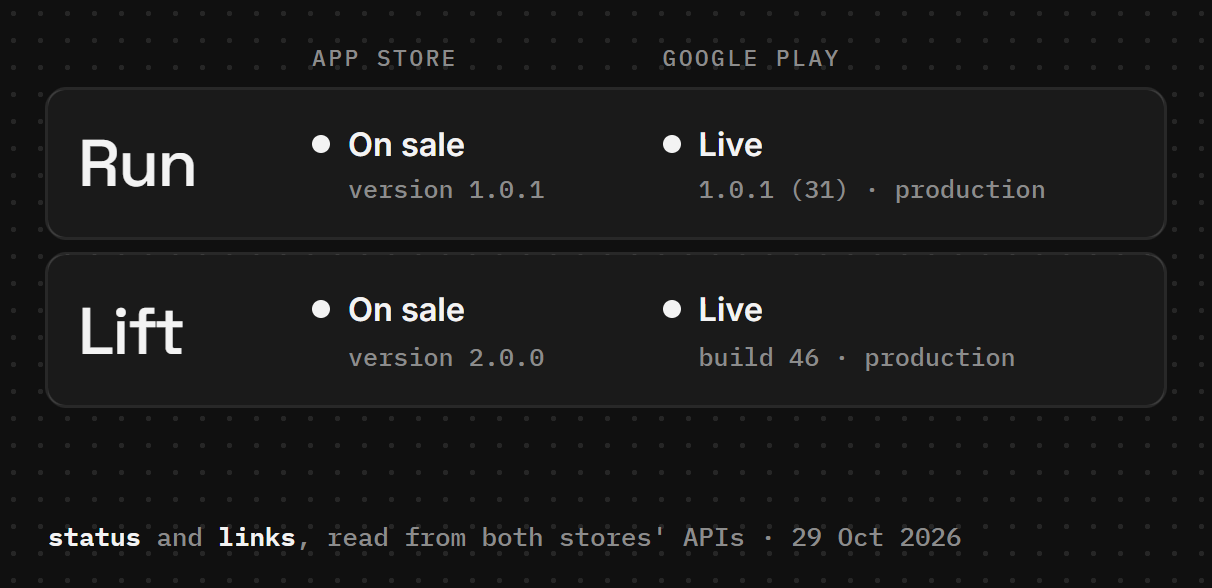
mobile-store-release (Ship): Takes an app through the App Store and Google Play from the terminal, and checks what review would reject first. Why I wrote it: Each store rule cost me a rejection to learn, and I kept re-explaining them to every project. Tested: loads when it's asked for and stays out otherwise in 5 of 5 cases. Shown: mobile-store-release's status and links for Run and Lift, read from the App Store's and Google Play's APIs on 29 Oct 2026: Run 1.0.1 on sale on the App Store and live on Google Play (1.0.1, build 31, production); Lift 2.0.0 on sale on the App Store and live on Google Play (build 46, production).
How I work: three problems
Each skill started as a problem I hit.
Three of them, with real output from a real run. Every skill is tested: it has to load when it's asked for and stay out when it isn't.
My portfolio crashed on iPhones and hid its Next button, while every desktop check passed. So I wrote phone-fit: Checks every step at real iPhone sizes: nothing scrolls, Next stays on screen, the page rests. Shown: phone-fit on matthewkay.dev, 29 Oct 2026: its 18 tour stops at four phone sizes. At 390 x 664 (an iPhone 13 Pro with Safari's bar showing) 16 of 18 fit before the fix and all 18 after; the two case-study cards had to scroll 5px. At 375 x 553 (iPhone SE) 4 stops still scroll. At 430 x 740 and 360 x 740 all fit. The page makes no changes at rest.
A live app kept only the first 17 pages of a 40-page document, and nobody was told. So I wrote silent-failure-sweep: Finds failures nobody is told about, ranked by who they hurt. Shown: The sweep on a test service with five planted silent failures, all five found. Top three of eight ranked findings: allergens show as none when the database fails; orders can get stuck, run twice or crash the queue; Download all orders stops at 1,000.
Each store rule cost me a rejection to learn, and I kept re-explaining them to every project. So I wrote mobile-store-release: Takes an app through the App Store and Google Play from the terminal, and checks what review would reject first. Shown: mobile-store-release's status and links for Run and Lift, read from the App Store's and Google Play's APIs on 29 Oct 2026: Run 1.0.1 on sale on the App Store and live on Google Play (1.0.1, build 31, production); Lift 2.0.0 on sale on the App Store and live on Google Play (build 46, production).
About
Building things is my passion.
Every product here started as a problem I had: frunt from working the floor in restaurants, MGKFitness from fitness apps I didn't enjoy using. I love every part of making them, this site included. They all ship through MGKCodes, my studio, and it's just me: I design, build, release and market each one.